
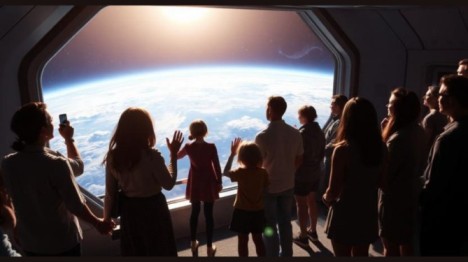
Humanity often talks about technology, survival plans, and space exploration when discussing the possibility of leaving our planet. However, one aspect rarely receives equal attention: emotion. What would it truly feel like to say a Farewell to Life on Earth, the planet that shaped our memories, cultures, and identities?
Although this idea may sound like science fiction, climate change, global risks, and rapid technological development have made conversations about humanity’s long-term future increasingly realistic. Therefore, beyond logistics and science, it becomes important to explore the emotional dimension of such a departure.
Let us explore the emotional side of this profound scenario through key questions many people naturally ask.
Why Does the Idea of a Farewell to Life on Earth Feel So Emotional?
Earth is not just a place where humans live; it is the foundation of human existence. Every story, culture, language, and memory connects to this planet. Consequently, imagining a Farewell to Life on Earth feels deeply personal.
People associate Earth with:
- Childhood memories and hometowns
- Natural beauty like oceans, forests, and mountains
- Family history and ancestral roots
- Cultural traditions and heritage
- Emotional connections to places and communities
Therefore, leaving Earth would feel like leaving behind a collective home. Even if humanity survives elsewhere, emotional loss would remain.
Moreover, Earth is familiar. Humans evolved here. The smell of rain, the rhythm of seasons, and the sight of blue skies are experiences deeply embedded in our psychology. Losing these familiar elements could create emotional stress, nostalgia, and even grief.
How Would People Emotionally Prepare for Leaving Earth?
If humanity ever had to say a Farewell to Life on Earth, preparation would not only involve spacecraft and survival equipment. Emotional readiness would become equally important.
People might prepare by:
- Preserving cultural traditions digitally
- Recording memories of Earth through images and storytelling
- Carrying symbolic items from home
- Creating memorials or farewell ceremonies
- Documenting personal and collective histories
Additionally, psychologists suggest humans cope better with change when they feel continuity. Therefore, communities would likely try to recreate Earth-like environments, traditions, and routines in new habitats.
Nevertheless, emotional preparation would remain challenging. Even today, people feel homesick when moving to a new city or country. Imagine leaving the entire planet behind.
Would Humanity Feel Hope or Fear During a Farewell to Life on Earth?
Emotions in such a scenario would likely be mixed. On one hand, fear and uncertainty would dominate. On the other hand, hope for survival and discovery could inspire people.
Fear might arise from questions like:
- What if the new world fails?
- Will future generations miss Earth?
- Can humans truly adapt elsewhere?
However, hope would also grow because humans have always explored new frontiers. Throughout history, migration and exploration helped societies survive and evolve.
Consequently, a Farewell to Life on Earth might become both a tragedy and a new beginning. People could grieve what they lose while simultaneously feeling excitement about possibilities beyond Earth.
How Would Future Generations View Earth After Humanity Leaves?
Interestingly, future generations born away from Earth may not feel the same emotional attachment. Instead, they might see Earth as:
- A historical birthplace
- A legendary ancestral home
- A symbol of humanity’s origins
- A distant memory preserved in archives
However, emotional storytelling would still shape their perception. Just as people today feel connected to ancestral lands they never visited, future humans might romanticize Earth.
Stories, music, films, and virtual reality recreations could keep Earth’s emotional significance alive. Therefore, Earth might transform from a home into a cherished myth or sacred heritage site.
Could Technology Help Ease Emotional Loss?
Technology would likely play a major role in managing emotional challenges tied to a Farewell to Life on Earth.
Possible technological solutions include:
- Virtual reality recreations of Earth environments
- Artificial gravity habitats simulating Earth living conditions
- Digital preservation of ecosystems and cities
- AI-powered memory archives
- Simulated natural weather systems
However, technology cannot fully replace genuine experiences. For example, seeing an ocean in virtual reality cannot entirely replicate the feeling of standing by real waves.
Still, technology could reduce emotional shock by preserving elements of Earthly life, helping future societies maintain psychological stability.
Would Saying Goodbye Change Humanity’s Identity?
Yes, leaving Earth would redefine humanity’s identity. Humans would no longer be Earth-bound beings but spacefaring citizens of the universe.
Such transformation could change how people think about:
- National borders
- Cultural differences
- Environmental responsibility
- Human cooperation
- Collective survival
Ironically, a shared Farewell to Life on Earth might unite humanity more than any previous event. Survival beyond Earth would require cooperation rather than division.
Therefore, emotional loss might also lead to emotional unity.
What Lessons Could Humanity Learn Before a Farewell to Life on Earth?
Even discussing this possibility teaches valuable lessons for today.
For example:
- Earth is fragile and worth protecting.
- Environmental responsibility matters.
- Global cooperation ensures survival.
- Human resilience drives adaptation.
- Emotional connections shape civilizations.
Instead of rushing toward a farewell scenario, humanity can use these reflections to protect Earth more effectively.
After all, preserving Earth reduces the chances of ever needing such a farewell.
Frequently Asked Questions About a Farewell to Life on Earth
Would humanity ever truly need to leave Earth?
Scientists consider it unlikely in the near future, but long-term cosmic risks, environmental damage, or technological ambitions might eventually push humanity to expand beyond Earth.
Would everyone leave Earth at once?
Most likely, migration would occur gradually. Initial groups would explore and settle elsewhere before larger populations move.
Could humans emotionally survive leaving Earth?
Humans are adaptable. While emotional challenges would exist, communities would likely create new traditions and connections to cope with change.
Would Earth become abandoned forever?
Not necessarily. Earth might become protected as a heritage site, scientific reserve, or symbolic birthplace of humanity.
Could exploring space actually strengthen appreciation for Earth?
Yes. Many astronauts report feeling stronger emotional connections to Earth after seeing it from space. Expansion into space could increase efforts to preserve our home planet.
What Does This Emotional Reflection Mean for Us Today?
Ultimately, discussing a Farewell to Life on Earth reminds us how precious our planet truly is. It encourages reflection on environmental protection, global unity, and humanity’s long-term future.
Instead of focusing only on distant possibilities, we can use these emotional insights to improve life here and now. Earth remains humanity’s only home today, and preserving it ensures future generations never need to say goodbye.