
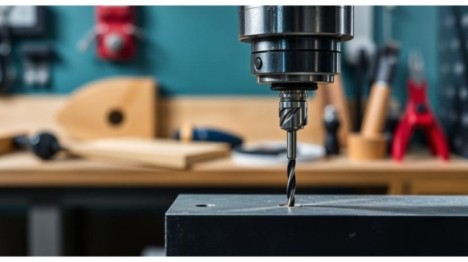
Angle drilling is essential in modern workshops, especially when working in tight or complex structures. The winkelbohrspindel is a specialized tool designed to make angled drilling easier while maintaining precision and power.
Whether you work in metal fabrication, woodworking, or machining, understanding this tool helps you complete tasks more efficiently. In this guide, we’ll explore what a winkelbohrspindel is, how it works, its types, applications, and how it compares with other drilling tools.
What Is a Winkelbohrspindel?
A winkelbohrspindel is an angle drilling spindle used to drill or drive fasteners at angles where a normal drill cannot reach.
In simple terms, it acts as a mechanical extension that redirects rotational force from a drill or machine into another direction, usually at 90 degrees or within an adjustable angle range.
Simple Working Idea
- Transfers rotational motion through internal gears
- Allows drilling in narrow or hard-to-access areas
- Maintains speed and torque during operation
- Supports multiple tool bit types
Unlike bulky tools, the winkelbohrspindel focuses on compactness and precision.
Historical Development of Angle Spindle Technology
The concept of redirecting mechanical motion is not new. Early mechanical systems such as mills and gear-driven machines already used similar principles.
Modern winkelbohrspindel designs evolved during industrial expansion when manufacturing required more accurate drilling solutions in confined spaces.
Over time, improvements in gear engineering and material processing helped create:
- Stronger housing structures
- Precision-machined bevel gears
- Higher rotational stability
- Better heat resistance
These advancements made the tool suitable for both industrial and workshop environments.
Main Types of Winkelbohrspindel
Different work environments require different spindle designs.
| Type | Angle Range | Power Source | Ideal Use |
| Manual Right-Angle Spindle | Usually fixed at 90° | Hand-powered | Light woodworking and quick tasks |
| Electric Angle Spindle | Adjustable | Corded or cordless drill | General workshop drilling |
| Pneumatic Angle Head | Adjustable | Compressed air | Heavy industrial work |
| CNC Spindle Head | Custom configurations | Machine-controlled | Precision automated machining |
Manual Right-Angle Model
This is the simplest version. It is suitable for light tasks that do not require high torque.
Electric Spindle Models
These are commonly used in workshops because they offer better speed control and stronger performance.
Pneumatic Angle Spindles
Industries prefer pneumatic versions because they generate less heat and can operate continuously in demanding production lines.
CNC-Compatible Spindles
Advanced manufacturing systems integrate angle spindles into automated machining centers for multi-directional drilling.
Key Features and Technical Characteristics
Angle Flexibility
Some spindles are fixed at 90 degrees, while others allow adjustment.
Advantages of adjustable models include:
- Better access to irregular joints
- Higher project versatility
- Suitable for different material shapes
Fixed-angle models are useful for repetitive production tasks.
Torque and Speed Efficiency
Since the spindle does not create power but redirects it, gear quality becomes very important.
High-quality models focus on:
- Maintaining torque transmission
- Minimizing rotational energy loss
- Reducing vibration and backlash
Poorly designed gear systems can reduce drilling efficiency.
Precision Gear Mechanism
Bevel gears are the heart of most winkelbohrspindel designs.
They help by:
- Changing motion direction smoothly
- Keeping rotation stable
- Improving drilling accuracy
- Supporting high-speed operation
Precision machining is especially critical for CNC applications.
Compact Structure
A compact spindle design provides several advantages:
- Access to narrow metal frames
- Easier positioning during assembly work
- Reduced interference during drilling
- Better control in detailed fabrication
How a Winkelbohrspindel Works
The operation is straightforward:
- Mount the spindle onto a compatible drill or machine.
- Select the required drilling angle.
- Insert and secure the drill bit.
- Align the tool with the surface.
- Start power transmission and begin drilling.
Following this sequence ensures better safety and accuracy.
Comparison With Other Angle Drilling Tools
Winkelbohrspindel vs Angle Grinder Attachment
Angle grinders are mainly cutting tools.
Limitations of grinder attachments include:
- Poor depth control
- Lower drilling precision
- Inconsistent torque transfer
Angle spindles provide more stable drilling performance.
Winkelbohrspindel vs Right-Angle Drill
Right-angle drills are built for angled drilling, but spindles are better when:
- Working in extremely tight spaces
- Using interchangeable drill bits
- High precision alignment is required
Standard Drill vs Winkelbohrspindel
| Feature | Winkelbohrspindel | Right-Angle Drill | Standard Drill |
| Space accessibility | High | Medium | Low |
| Torque stability | High | High | Medium |
| Drilling precision | High | Medium | Medium |
| Bit compatibility | High | Medium | High |
| Comfort in tight joints | Excellent | Good | Poor |
Industrial and Practical Applications
Metal Fabrication
Angle drilling is common when building structural frames, brackets, and mechanical assemblies.
Automotive Manufacturing
Space inside engines and chassis structures is limited, making angle spindles very useful.
Woodworking and Furniture Production
Hidden joints and dowel hole drilling become easier.
CNC Manufacturing
Modern machining centers sometimes integrate angle spindle heads for complex operations.
How to Choose the Right Winkelbohrspindel
Consider these factors before buying:
Purpose of Use
- Heavy metal drilling
- Light DIY work
- Professional machining
- Automated production
Performance Requirements
- Torque range
- RPM speed compatibility
- Heat resistance
Compatibility
- Drill interface type
- Bit size support
- Machine attachment system
Maintenance Tips
Proper care extends tool lifespan.
- Clean the spindle after every use
- Apply gear lubrication regularly
- Check alignment before heavy drilling
- Store in protective cases
Neglecting maintenance can cause heat buildup and gear wear.
Common Mistakes to Avoid
- Using inappropriate drill bits
- Applying excessive pressure during drilling
- Ignoring lubrication schedules
- Adjusting angles without locking mechanisms
Avoiding these errors improves safety and performance.
Is a Winkelbohrspindel Worth Buying?
The tool is highly valuable if you frequently work in confined spaces or require accurate angled holes.
It is especially useful for:
- Structural metal assembly
- Precision woodworking
- Mechanical production
- DIY repair projects
Final Thoughts
The winkelbohrspindel is more than a simple attachment it is a practical engineering solution for modern drilling challenges.
By redirecting rotational power efficiently, it allows users to reach difficult areas while maintaining accuracy and control. Whether for professional manufacturing or home workshop projects, this tool adds flexibility and precision to drilling operations.
Frequently Asked Questions
What materials can a winkelbohrspindel drill?
It can work on wood, metal, plastic, and composite materials when using suitable drill bits.
Can it be used with any drill?
Most models support standard interfaces, but compatibility should be checked before purchase.
Does it reduce drilling power?
High-quality gear systems minimize torque loss.
Is it good for DIY projects?
Yes, especially if you often work in tight or hard-to-reach spaces.